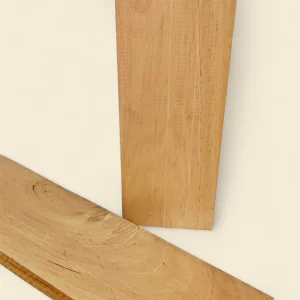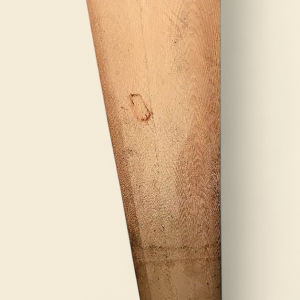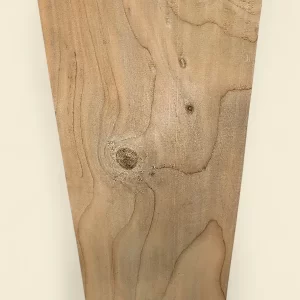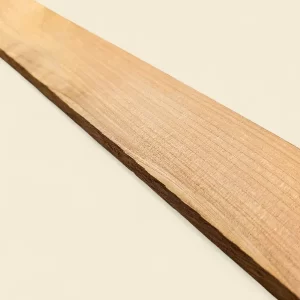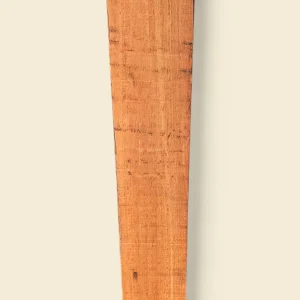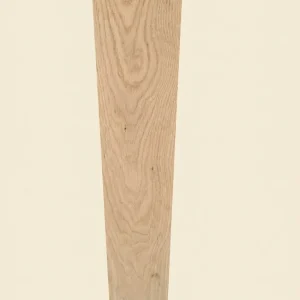

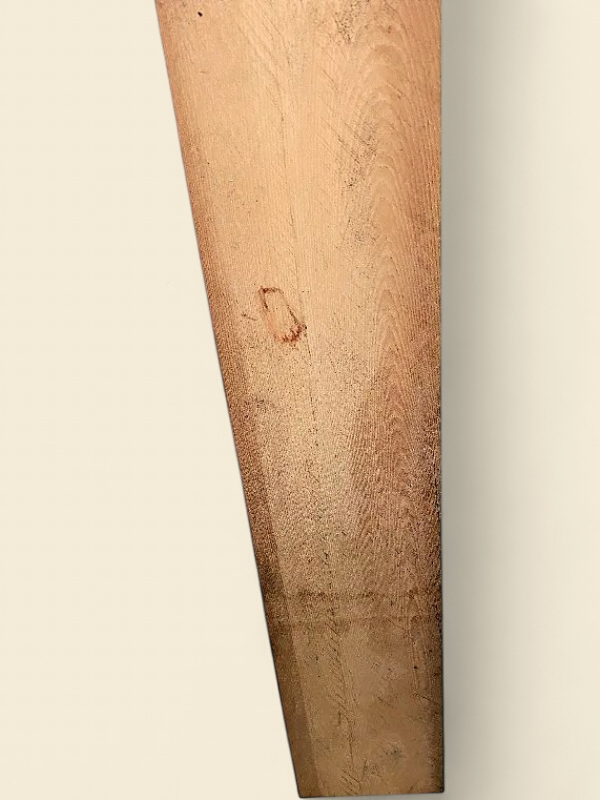
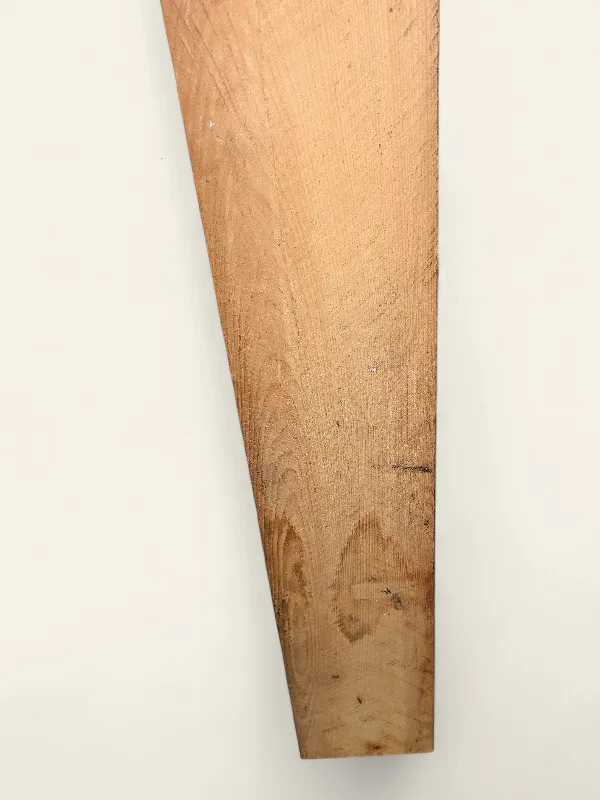
Celery Top Pine – Sawn – 12×100×900mm
Celery Top Pine sawn board at thin panel dimensions, Tasmanian endemic conifer with fine straight grain and exceptional dimensional stability. Drawer bottoms, cabinet backs, fine scroll-saw work. Ships Australia-wide while stocks last.
$23.10
Product Details
Celery Top Pine (Phyllocladus aspleniifolius), a Tasmanian endemic conifer milled to thin-section panel proportions. Pale cream to tan heartwood, fine straight grain, and the dimensional stability that has earned the species a place in fine cabinetry, marine joinery, and box-making since the colonial era.
At 12mm dressed thickness, this stock is the dimension Tasmanian cabinetmakers reach for first when the job calls for drawer bottoms, cabinet backs, or decorative panel inserts that need to stay flat.
Why Celery Top Pine
Tasmania produces a handful of timber species that are genuinely difficult to replicate from mainland supply. Celery Top Pine is one of them. The species grows slowly on the west coast of Tasmania, and the result is a softwood with the stability of a hardwood, fine, even grain, consistent density, no wild knot structure. For panel work, drawer bottoms, and fine scroll-saw applications where thin stock must remain flat and machine cleanly at scale, this is the timber the trade has returned to for over a century. We pack thin-section Celery Top carefully for transit north. This parcel is old stock we’ve held for years, now recovered and ready to sell.
Working Properties
- Hardness: Firm for a softwood. Holds an edge for fine joinery work. Light and easy to handle in long thin sections.
- Grain: Fine, straight, even. Planes cleanly, holds detail under scrapers and fretsaws.
- Machining: Cuts and shapes cleanly with sharp hand and power tools. Takes oil and lacquer evenly. Holds glue well.
- Surface: Supplied rough-sawn. At 12mm thickness, dress lightly and only what you need to true the face.
- Finishing: Rustins Danish oil warms the tone without darkening the pale colour. Clear lacquer for cabinet-grade interior work.
Shipping & Pickup
Ships Australia-wide via Australia Post or Aramex. We pack thin-section stock carefully for transit. Pickup from our Mulgrave NSW location Mon–Fri 9am–4pm, Sat 9am–12pm. Call (02) 4577 5277 or email sales@trendtimbers.com.au.
Limited Stock, Once It’s Gone
Celery Top Pine is a Tasmanian-only species, limited in production volume — and this parcel is old stock we’ve held for years. Fixed quantity, no reorders. Listed under From the Stacks. When it’s through, the listing closes with it.
A Note on Our Wood Products
Please remember that the photos you see are indicative only. As a beautiful, natural material, wood inherently varies in grain, colour, and figure. While we meticulously select outstanding pieces to send your way, each item will possess its own unique charm. We believe these natural variations are part of what makes our wood products so special and truly one-of-a-kind.
Kiln dried and ready to work
All of our timber is kiln dried to Australian standards, so it arrives stable and ready to be worked.
Because timber is a natural product, not all stock is ready to send immediately. Occasionally we need to mill your timber to the size you’ve specified before dispatch.
Related products
-

Spanish Cedar – Sawn – 50×150mm
Price range: $51.70 through $146.40 -
Celery Top Pine – Sawn – 25×100×900mm
$31.90 -
Lebanese Cedar – Sawn – 2 sizes
Price range: $33.00 through $66.00 -
Macrocarpa Pine – Sawn – 25×75×900mm
$18.70 -
Grandis – Sawn – 25×150mm
Price range: $11.00 through $31.10 -
American Oak – Sawn – 22×150mm
Price range: $21.20 through $66.00